Thinking of a Greener Driveway in Hampshire? Here’s What "Sustainable" Actually Means
"Sustainable" gets used loosely, but for a driveway it comes down to two measurable things: does it let rainwater soak away, and does it last long enough to avoid being dug up and replaced? This guide explains what makes a Hampshire driveway genuinely sustainable and why resin-bound has become the go-to choice.
Permeable vs Impermeable: The Difference That Matters
The single biggest factor in a driveway’s sustainability is whether water can pass through it. Impermeable concrete and standard tarmac shed every drop of rain into the road and drainage system, which is exactly why English planning rules have restricted them for front driveways since 2008. A resin-bound surface is fully permeable and SuDS-compliant — rain filters through the aggregate into a free-draining base and back into the ground. That keeps water on your own plot and takes load off the drains.
The Hidden Environmental Cost of the Wrong Surface
A driveway that has to be relaid every 10–15 years, re-sanded, and treated with weedkiller carries an environmental cost long after installation. Block paving needs regular re-sanding and periodic relaying; tarmac needs resurfacing and crack sealing. Each cycle means more materials, more disruption, and more waste to landfill. In Hampshire, where many drives sit over clay or near sensitive chalk-stream catchments, that ongoing footprint matters as much as the day-one choice.
Why Resin-Bound Is the Long-Term Sustainable Option
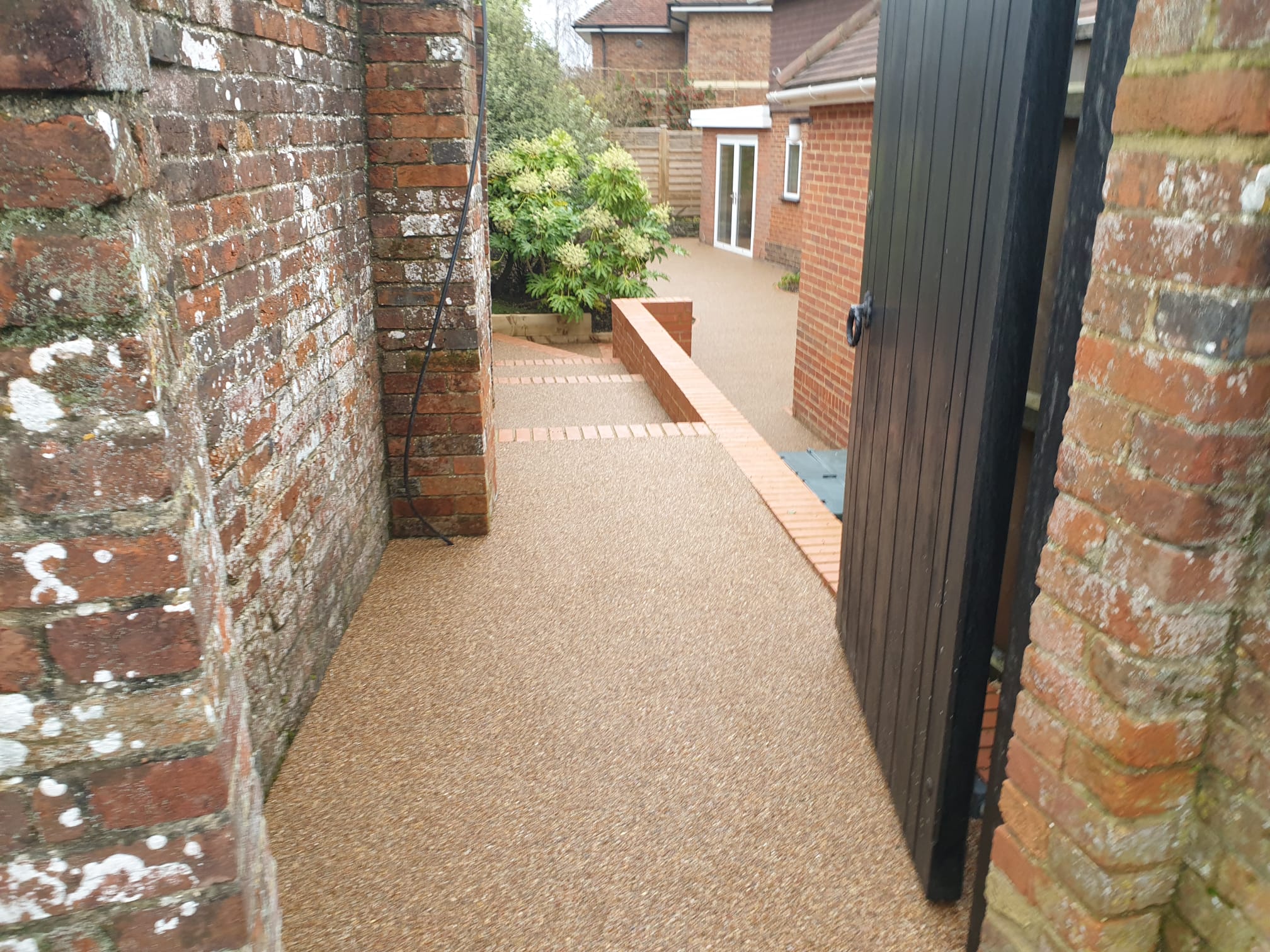
Resin-bound wins on whole-life sustainability. The natural aggregate is locked in with UV-stable resin that keeps its colour and integrity for 20+ years, so there is no resurfacing cycle. It is frequently laid over a sound existing base, avoiding excavation and landfill. It needs no herbicides — the surface is weed-resistant — and only an occasional pressure wash. At £65–£110 per m² and backed by a 10-year guarantee, it delivers the environmental benefits without a cost penalty over conventional surfaces.
Frequently Asked Questions
Is a sustainable driveway worth it in Hampshire?
Yes. For £65–£110 per m² you get a fully permeable, SuDS-compliant surface that lasts 20+ years, needs no chemical weed control, and helps prevent surface-water flooding — with lower whole-life cost than block paving or tarmac.
What is the most eco-friendly driveway surface?
A resin-bound driveway is among the most sustainable options: fully permeable, long-lasting, and maintenance-light. It manages rainwater on site and avoids the herbicides and repeated resurfacing that conventional surfaces need.
Does a permeable driveway really reduce flooding?
It reduces the run-off from your property that contributes to localised flooding. Instead of water sheeting off into the road and drains, rainfall soaks through the surface into the ground — a real benefit on Hampshire’s clay soils and low-lying streets.
Will I need planning permission for a sustainable driveway?
Almost never. A permeable resin-bound surface is SuDS-compliant and falls under permitted development, so no planning application is needed for most Hampshire front driveways.
Get a Free Quote in Hampshire
Call 07384 599889 or request a free quote online. See all our seasonal driveway services.